Lower Back Stiffness Relief: Loosening A Tight Lower Back
Stiffness and pain are different problems. Stiffness is the feeling that your lower back has seized in one position and needs a few minutes of coaxing before it moves normally — and it responds particularly well to warmth and gentle motion.
The most common cause is simply time spent in one position — sitting, standing or lying — which leaves the paraspinal muscles shortened and poorly circulated. Physical work, lifting and repetitive bending create the same tightness from the opposite direction.
Dehydration, cold weather and stress all make it worse, which is why so many people notice their back is worse in winter and during busy periods at work.
The three things that loosen it
Warmth increases circulation into the tissue. Movement takes the joints and muscles through their range so they stop guarding. Support reduces the load that made them tighten in the first place.
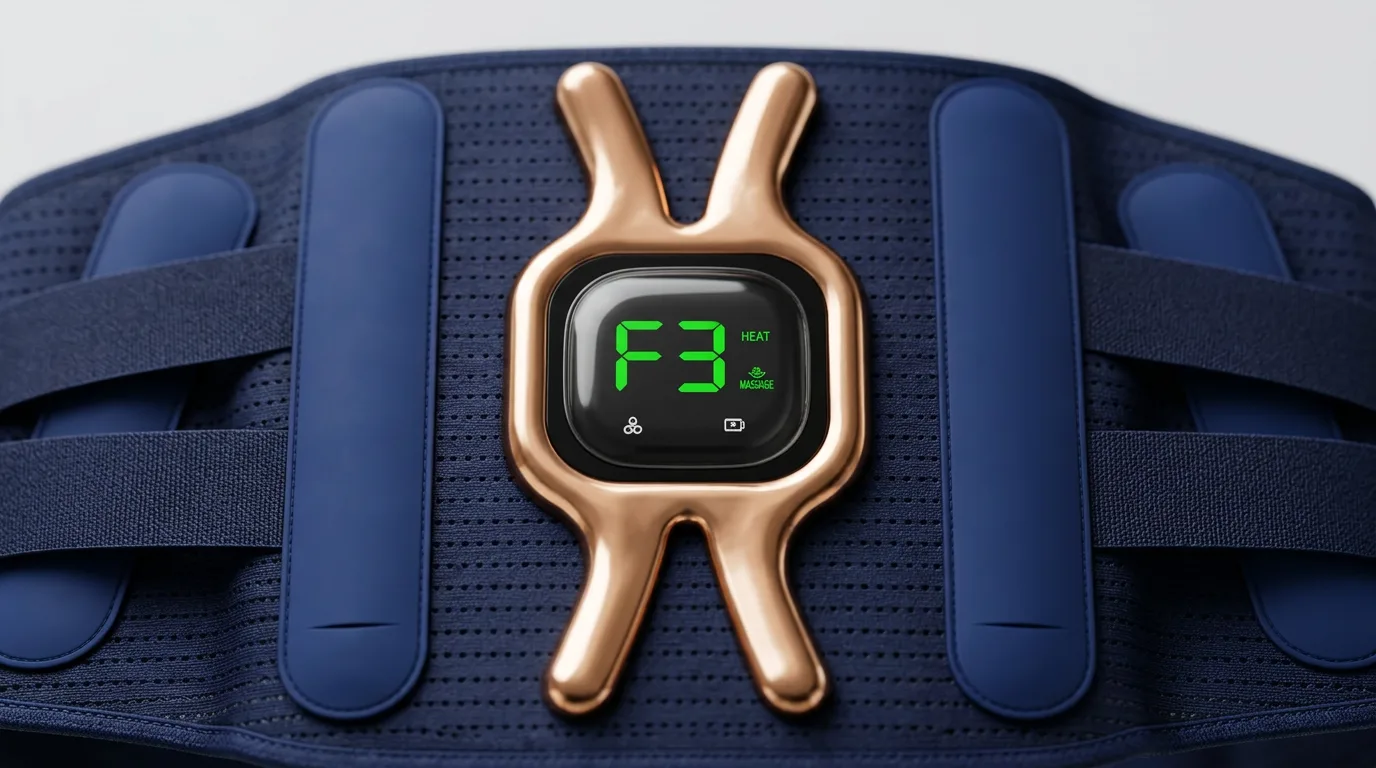
Most people do one of the three. Doing all three, in the same fifteen minutes, is why a combined device tends to work better than a heating pad and good intentions.
Warmth for 15 minutes to prepare the tissue
Gentle movement immediately afterwards while it is still warm
Support during the hours that caused the tightness
Repeat daily — stiffness responds to consistency, not intensity
Gentle movements that suit a stiff back
Pelvic tilts, single knee-to-chest, a slow cat-cow on hands and knees, and a short walk cover most of what a stiff lower back needs. None of them should hurt.
Avoid aggressive stretching, especially cold. Forcing range into a guarding muscle usually leaves it tighter an hour later.
When stiffness is telling you something else
Stiffness that persists for over an hour every morning, comes with swelling in other joints, follows a fall or injury, or is accompanied by numbness, tingling or leg weakness deserves a proper medical opinion.
The Triple Method Back Massager is a comfort device for everyday tightness and ache. It is not a treatment for a diagnosed condition and it is not a reason to delay seeing a doctor.
A practical daily stiffness routine
Because stiffness responds to consistency, it helps to attach the routine to something you already do every day rather than treating it as a separate task. Many people run their session while having coffee, watching the news, or right after a shower when the muscles are already a little warmer.
Two short sessions — one in the morning, one in the evening — tend to work better for chronic tightness than one longer session, because they keep the tissue from stiffening back up over a long stretch of stillness during the day.
Workplace and vehicle habits that reduce recurring tightness
If your stiffness comes back at the same time every day, look at what you were doing two or three hours earlier. Long unbroken stretches at a desk, a slouched position in a car seat, or standing still on a hard surface are common repeat offenders, and each has its own fix worth reading about — from desk chair setup to driving posture.
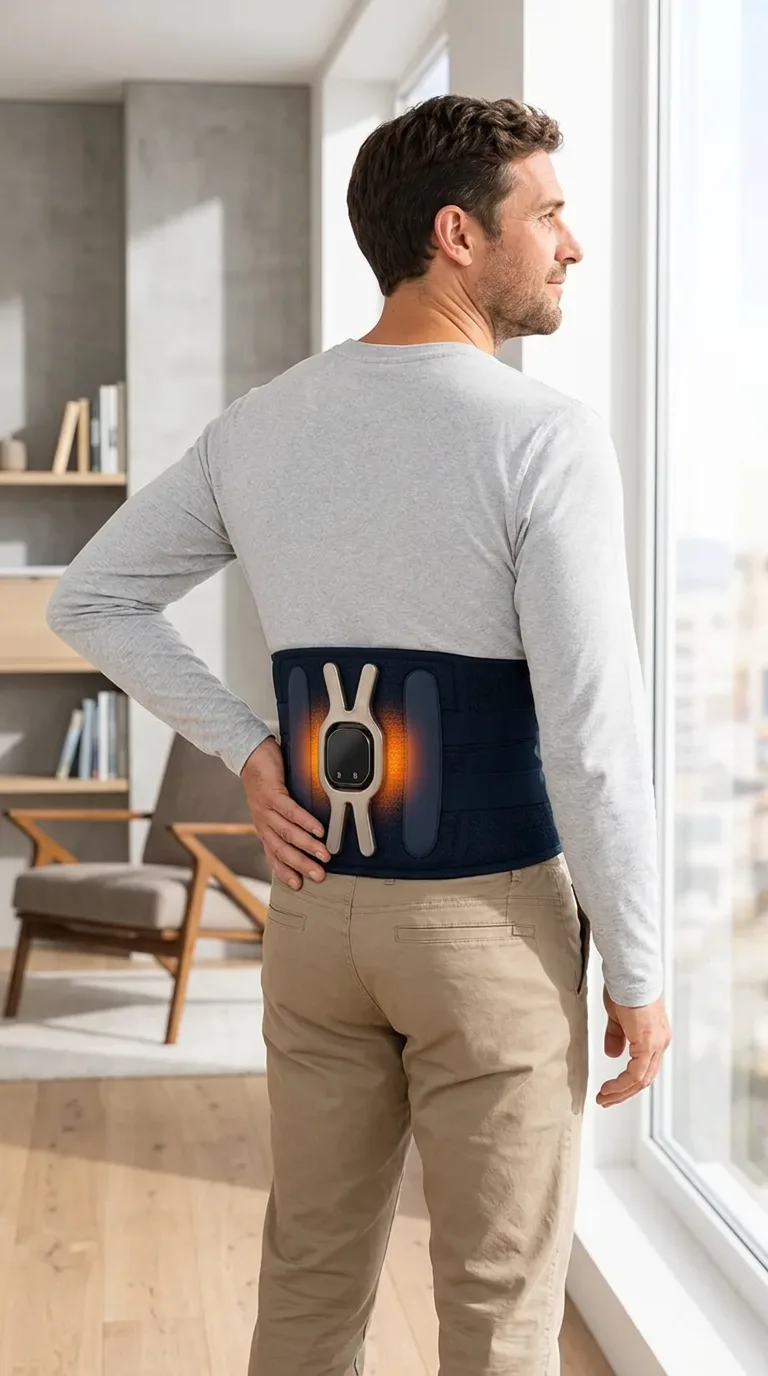
A wearable belt worn for support (power off) during those known trigger periods, followed by a proper heat and vibration session afterward, is the pattern most customers settle into once they have identified when their own stiffness tends to build.
Comparing common triggers and fixes
Different triggers benefit from slightly different emphasis, even though warmth, movement and support are the common thread. Use the table as a starting point.
Trigger
What usually helps most
Long sitting stretches
Movement breaks every 45 minutes plus lumbar support
Cold weather
Extra warmth session, stay hydrated, keep moving indoors
Physical/manual work
Support belt during work, heat and stretching after
Stress-related tension
Slower breathing during warmth sessions, gentle movement, sleep
Red flags — when a tight back needs medical attention
See a doctor if stiffness lasts well over an hour each morning, is accompanied by swelling in other joints, follows a fall or accident, or comes with numbness, tingling, weakness down a leg, or any change in bladder or bowel control.
Unexplained weight loss or fever alongside back stiffness should also be assessed promptly. These are not common causes of everyday tightness, but they are the reason this page repeatedly points back to a doctor rather than positioning warmth and support as a cure-all.
Information on this page is educational and is not medical advice or a diagnosis. Stop using the product if it causes discomfort. Speak with a qualified healthcare professional about persistent, severe or unexplained pain, or before use if you have reduced sensation, are pregnant, or have an implanted electronic device.
Choose your bundle
Free worldwide shipping on every order · Prices in USD · 90-day money-back guarantee
Independent customer reviews are not published yet.
We will add feedback here as customers choose to share it. Until then, review the product specifications, instructions, shipping terms and guarantee before deciding.
Warmth first for around 15 minutes, then gentle movement such as pelvic tilts, knee-to-chest and a short walk while the tissue is still warm. Repeat daily rather than doing one long session occasionally.
Is stretching good for a stiff lower back?
Gentle range-of-motion movement is helpful; aggressive stretching of cold, guarding muscles usually is not. Warm the area first and keep everything within a comfortable range.
Why is my back stiffer in cold weather?
Cold tissue is less pliable and people move less in winter, so muscles stay static for longer. This is one of the reasons a heated belt gets used most in the colder months.
How often should I use heat for stiffness?
Once or twice a day in 15 to 20 minute sessions suits most people. Consistency over weeks matters more than longer individual sessions.
Can stiffness be a sign of something serious?
It can. Stiffness lasting over an hour each morning, with joint swelling, after an injury, or alongside numbness or leg weakness should be assessed by a doctor.
Is it safe to use if my stiffness is linked to sciatica?
Gentle warmth and support are often comfortable for sciatic-type stiffness, but check with a doctor first if you have numbness, tingling or weakness running down your leg.
Can I use it if I have a herniated disc causing stiffness?
This is a comfort product, not a treatment for a diagnosed disc condition. Speak with your doctor about whether heat and vibration are appropriate for your specific situation.
Is it safe during pregnancy?
Check with your doctor before using heat or vibration on your lower back while pregnant, since guidance can depend on your stage of pregnancy and individual circumstances.
Can people with a pacemaker use it?
Anyone with a pacemaker or another implanted electronic device should check with their doctor before using a vibration or heat massage product.
How long does it take for daily use to reduce stiffness?
Many people notice a difference within the first few sessions, with a more consistent improvement in day-to-day tightness over 2 to 6 weeks of regular use.
Risk-free
90-Day Money-Back Guarantee
Use the Triple Method Back Massager every day for 90 days. If your back doesn't feel better, email us and we'll refund the price of the product. No return-shipping runaround, no restocking fee, no need to keep the box.