Back Pain Relief At Home: A Routine You Can Actually Keep
The problem with most at-home back advice is not that it is wrong — it is that nobody keeps it up. Twelve stretches, an ice routine and a posture overhaul lasts about four days. This page focuses on the small number of things that fit into a normal evening.
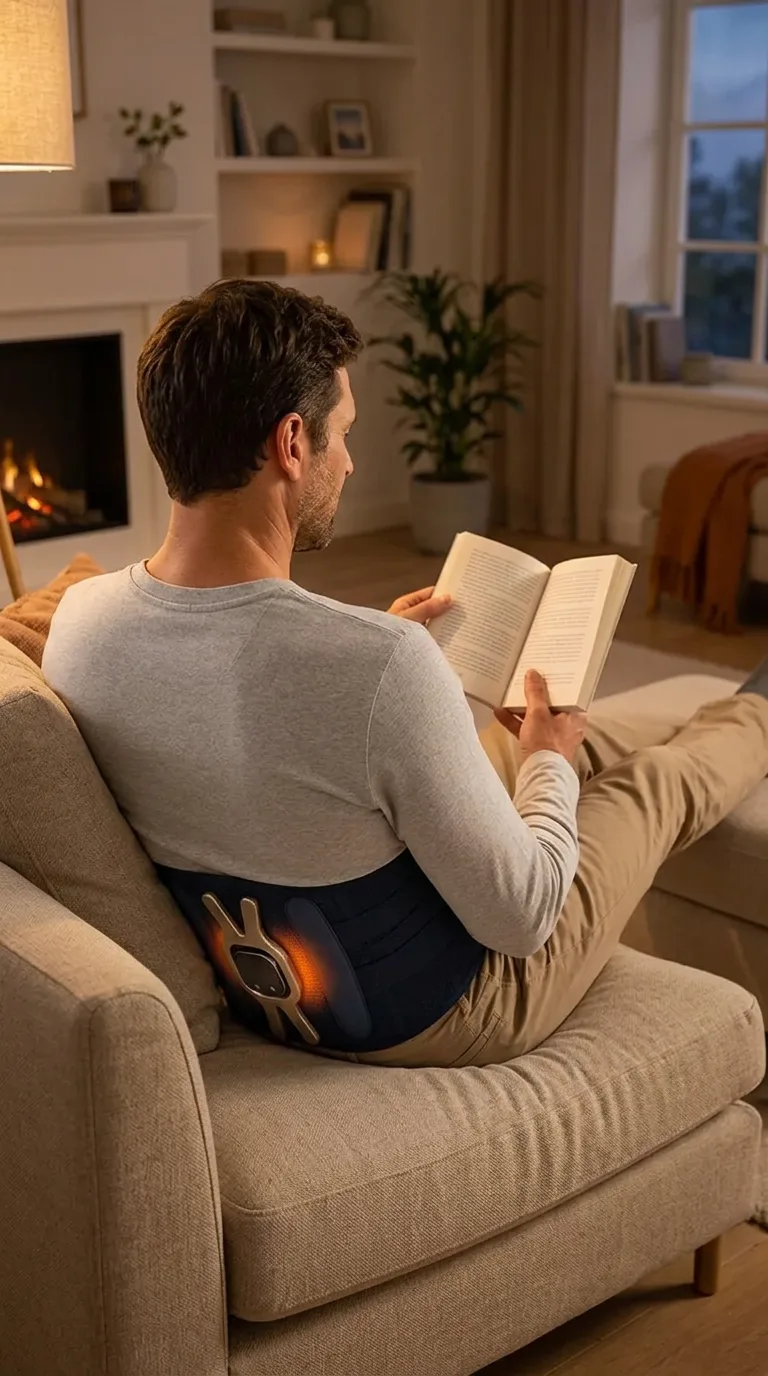
For ongoing stiffness and everyday muscular ache — as opposed to a fresh injury — warmth is the easiest first step and the one people stick with. It requires nothing of you except sitting still for fifteen minutes.
Warmth encourages circulation into tissue that has been static all day. It also makes everything else you do afterwards — a short walk, a gentle stretch — noticeably more comfortable.
Then movement, in small amounts
Complete rest tends to make general back stiffness worse rather than better. Short, frequent movement is the goal: standing up every 45 minutes, a ten-minute walk after dinner, gentle range-of-motion rather than aggressive stretching.
Doing that immediately after a warm session is easier and more comfortable than doing it cold, which is why the order matters.
Stand up and walk for two minutes every 45 minutes of sitting
A 10-minute walk after your evening meal
Gentle knee-to-chest and pelvic tilts, not aggressive stretching
Keep your feet flat and hips slightly above your knees when seated
Fix the eight hours you are not thinking about
Fifteen minutes of relief will not outweigh eight hours of a slumped chair. Raising your screen to eye level, getting your feet flat on the floor and supporting your lumbar curve while you sit removes the load that creates the ache in the first place.
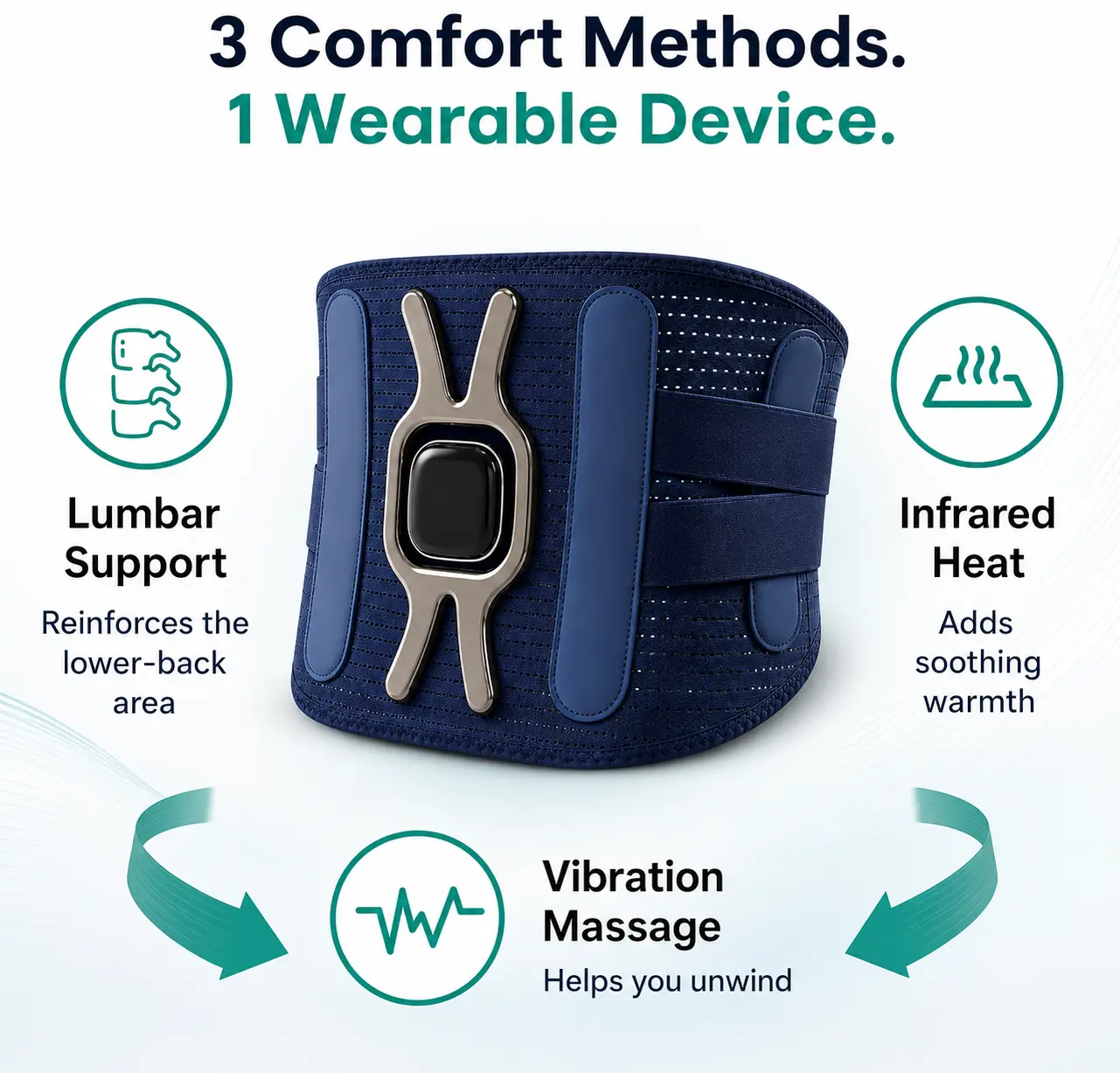
That is where a support belt earns its place at home: worn during the working day it holds the curve, and in the evening the same belt runs heat and massage. This overlaps a lot with what happens to people who sit all day at a desk, so if that describes you it is worth reading how back pain from sitting builds through the day.
A realistic daily routine
Morning: put the belt on for support while you get going, or run a short warm session if mornings are your worst time — morning back stiffness has its own pattern worth understanding. Daytime: stand and walk every 45 minutes. Evening: a 15-minute session with heat and vibration while you watch television.
That is the entire routine. It takes fifteen dedicated minutes a day, and it is simple enough to keep doing over the long term.
What is usually going on in the tissue
Most everyday low back ache without an injury is muscular and mechanical: a mix of shortened hip flexors, fatigued paraspinal muscles, and joints that have been sitting in a flexed position for hours. None of that is dangerous on its own, and it is exactly the kind of ache that responds to warmth, gentle movement and reduced load.
That is different from pain caused by a specific structural problem, which is why this page describes management for everyday ache and not a diagnosis. If your pain has a clear cause — a fall, a specific twisting injury, or it radiates sharply down one leg — the approach below still applies for comfort, but you should also get it looked at.
A simple week-by-week rhythm
Consistency matters more than intensity. Individual responses vary, so treat any timeline as a rough guide rather than a promise. The table below is a rough guide, not a prescription — adjust it around your own schedule.
If a particular day is worse than usual, that is normal; it does not mean the routine has stopped working. Back off intensity rather than stopping altogether.
Time of day
What to do
Morning
Belt on for support, or a short warm session if you wake stiff
Midday
Stand and walk 2 minutes every 45 minutes seated
Evening
15-minute heat and vibration session before you sit for the night
Weekly
One or two slightly longer walks; note anything that is not improving
Setting up your chair and workspace properly
A few one-off adjustments do more than any daily habit: screen at eye level, feet flat on the floor, and something behind your lumbar curve rather than your shoulder blades. If your chair does not hold that curve, the belt does the job instead and travels with you to any chair, including a dining chair or a car seat.
Small things compound. A laptop propped on a stack of books, a rolled towel behind the lower back, and a habit of standing to take phone calls all reduce the total load your back carries across a day without requiring any willpower once they are set up.
Red flags — when to see a doctor
Most everyday back ache is not an emergency and responds to the routine above. But certain signs mean you should stop managing it at home and get medical attention: numbness or tingling spreading down a leg, new leg weakness or a foot that drags, loss of bladder or bowel control, unexplained weight loss, fever, or severe pain that started after a fall or accident.
If pain is worsening steadily over weeks rather than settling, or it wakes you repeatedly at night unrelated to position, that also warrants a proper assessment. A comfort device like the Triple Method Back Massager is designed for everyday muscular ache — it is not a treatment for any of the above, and it should never delay you seeing a doctor.
Information on this page is educational and is not medical advice or a diagnosis. Stop using the product if it causes discomfort. Speak with a qualified healthcare professional about persistent, severe or unexplained pain, or before use if you have reduced sensation, are pregnant, or have an implanted electronic device.
Choose your bundle
Free worldwide shipping on every order · Prices in USD · 90-day money-back guarantee
Independent customer reviews are not published yet.
We will add feedback here as customers choose to share it. Until then, review the product specifications, instructions, shipping terms and guarantee before deciding.
What is the fastest way to relieve back pain at home?
For everyday muscular stiffness, warmth plus gentle movement is the quickest practical combination. Heat first for 15 minutes, then a short walk — trying to stretch cold, tight muscles is much less comfortable and less effective.
Should I use heat or ice for back pain?
As a general rule ice is used for a fresh injury with swelling in the first 48 hours, and heat for ongoing muscular stiffness and tension. If you are unsure, or the pain followed an injury, ask your doctor.
Is rest good for back pain?
Short rest can help immediately after a flare-up, but prolonged rest usually makes general stiffness worse. Gentle regular movement is what most people find helps over days and weeks.
How long until an at-home routine makes a difference?
Warmth and support feel better within the first session. Meaningful day-to-day change usually takes consistent daily use over 2 to 6 weeks.
Is a heat and massage belt safe to use with sciatica?
Many people with sciatic-type leg pain find warmth and gentle support comfortable, but sciatica has several possible causes and it is worth confirming with a doctor before starting a routine, especially if there is numbness or weakness in the leg.
Can I use it if I have a herniated disc?
This is a comfort device, not a treatment for a diagnosed disc problem. If you have a confirmed or suspected herniated disc, check with your doctor before using heat, support or vibration around the area.
Is it safe to use during pregnancy?
Speak with your doctor before using any heat or vibration device on your lower back during pregnancy, particularly around the abdomen and in the first trimester.
Can I use it if I have a pacemaker or other implanted device?
If you have a pacemaker or any other implanted electronic device, check with your doctor before using any vibration or electrical massage product.
How long should each session last?
Around 15 minutes is the typical session length most people settle on. Start shorter if it is your first time, and stop if anything feels uncomfortable rather than soothing.
When should I see a doctor?
See a doctor if the pain follows an injury, radiates down a leg, comes with numbness, weakness or bladder or bowel changes, or does not improve over a few weeks. A comfort device is not a substitute for medical advice.
Risk-free
90-Day Money-Back Guarantee
Use the Triple Method Back Massager every day for 90 days. If your back doesn't feel better, email us and we'll refund the price of the product. No return-shipping runaround, no restocking fee, no need to keep the box.