Back Massager For Nurses And Standing-All-Day Jobs
Nurses, cashiers, chefs, warehouse staff and retail workers are heavily represented in our reviews, and they describe the same thing: the back holds up fine until hour eight, then the last four hours are pure endurance.
Standing does not flatten the lumbar curve like sitting does — it exaggerates it. Hours of standing, especially on hard floors, leaves the lower back muscles in constant low-level contraction and the joints compressed.
Add lifting, bending over beds or trolleys, and the twisting that comes with reaching, and by late shift the muscles are fatigued past the point where good posture is even available to you.
Wearing support during the shift
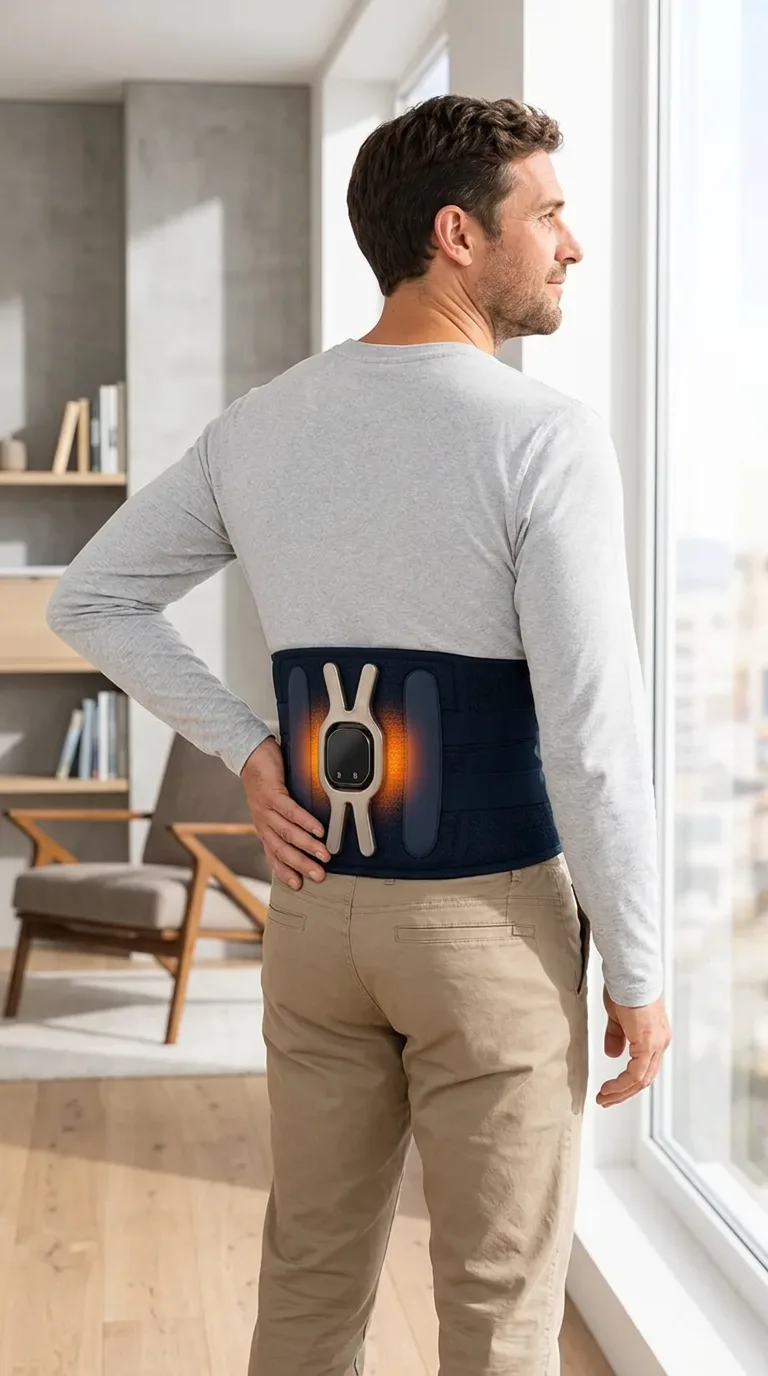
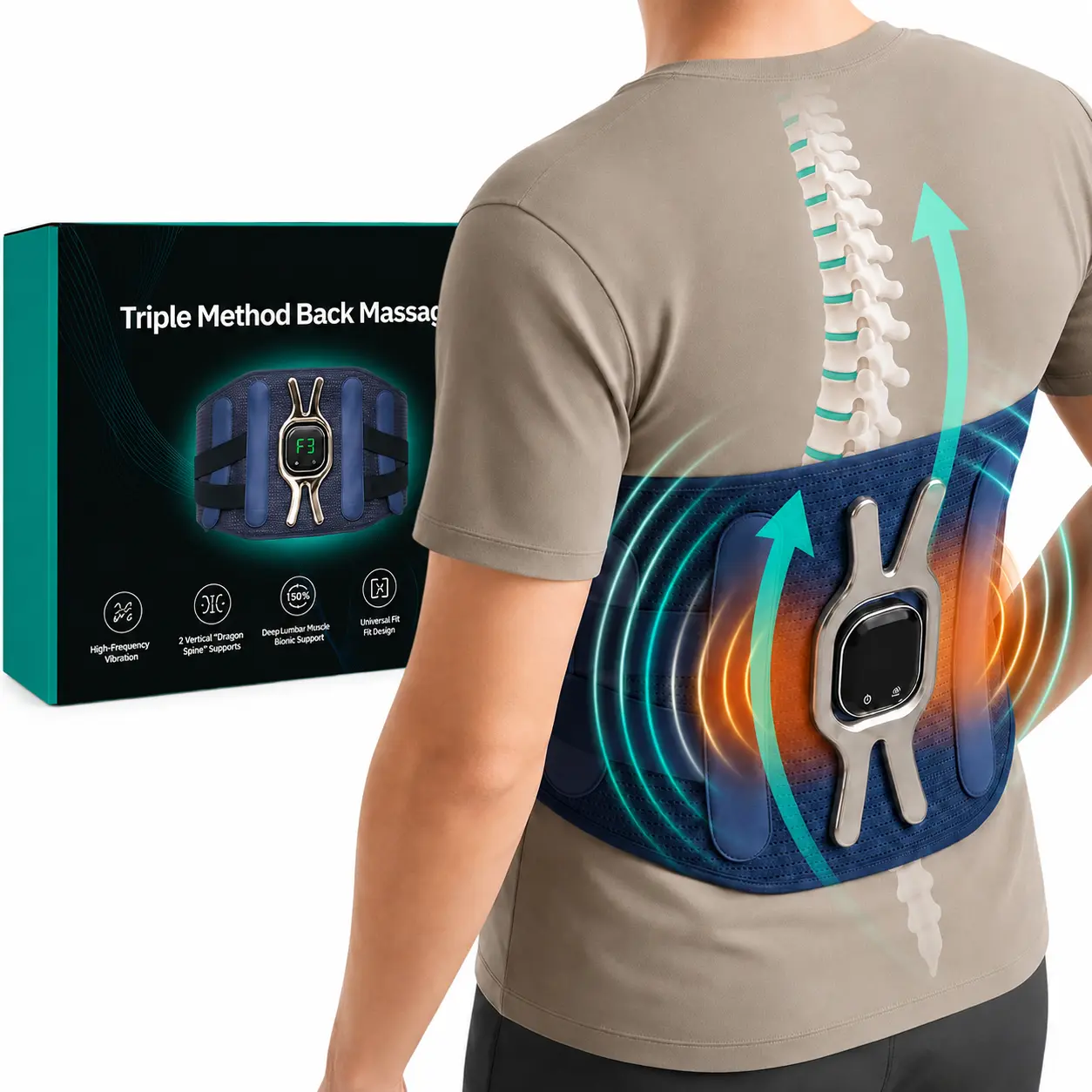
Worn with the power off, the belt gives your lower back something to work against for the whole shift. It sits under a uniform or scrub top without being obvious, and there is nothing to trail, plug in or set down.
Most shift workers describe the difference showing up in hours nine through twelve rather than at the start — the point is not to feel amazing at 9am but to still be functional at 8pm.
Support-only wear through the shift, under the uniform
Supportive footwear and an anti-fatigue mat where possible
Shift weight between feet rather than locking your knees
Bend at the hips and knees, not the lower back
The post-shift 15 minutes
The recovery session matters more than anything you do during the shift. Fifteen minutes of heat and vibration when you get home, before you sit down for the evening, is the routine customers report as the game changer.
Doing it before you collapse onto the sofa is the trick — after you sit down, it does not happen.
Working shifts around charging
A charge covers 4 to 6 sessions, so charging once or twice a week is enough for a post-shift routine. If you also want a session before work, charge overnight after every second shift.
For people working back-to-back long shifts, the two-pack means one belt is always charged and ready.
What is going on physically during a long standing shift
Standing keeps the lower back muscles in low-level, sustained contraction rather than the flattened, passive load of sitting. As the shift goes on those muscles fatigue, which is why posture tends to visibly worsen — shoulders round, the pelvis tips forward — in the last few hours even in people who started the shift standing tall.
Repetitive bending and lifting, common in nursing, warehouse and hospitality roles, adds a second source of strain on top of static standing. Neither is dangerous on its own in the short term, but the combination is why cumulative fatigue across a shift, and across a working week, matters more here than in most desk-based jobs.
Stretches and movement habits between tasks
Where the job allows it, a few seconds of movement between tasks — a standing back extension, a gentle side bend, rocking weight from foot to foot — helps break up the sustained contraction that builds through a shift. Calf raises and ankle circles during quiet moments also support circulation in the legs, which indirectly reduces how hard the lower back has to work to compensate for tired legs.
On days off, gentle mobility work such as knee-to-chest stretches, cat-cow, and short walks helps the tissue recover rather than simply resting completely, which for most people leaves things stiffer rather than better by the next shift.
A shift-based routine at a glance
The table below sets out a simple pattern many shift workers settle into once they have a support belt as part of the routine.
Point in the shift
What to do
Before the shift
Belt on under uniform, power off, for support
Breaks
Loosen the belt briefly, stretch, sit down if you can
End of shift, before sitting down
15-minute heat and vibration session
Days off
Gentle movement and stretching rather than complete rest
Red flags — when shift-related back pain needs a doctor
Ordinary end-of-shift ache that eases with an evening session and a good night's sleep is common in standing jobs and not usually a cause for concern. See a doctor if you develop numbness or tingling down a leg, new weakness that affects your walking or standing, any change in bladder or bowel control, unexplained weight loss, or pain following a specific lifting or slipping incident at work.
If pain is getting worse week over week despite support and recovery sessions, or is starting to affect your ability to do your job safely, it is worth an occupational health or medical review rather than continuing to push through it.
Information on this page is educational and is not medical advice or a diagnosis. Stop using the product if it causes discomfort. Speak with a qualified healthcare professional about persistent, severe or unexplained pain, or before use if you have reduced sensation, are pregnant, or have an implanted electronic device.
Choose your bundle
Free worldwide shipping on every order · Prices in USD · 90-day money-back guarantee
Independent customer reviews are not published yet.
We will add feedback here as customers choose to share it. Until then, review the product specifications, instructions, shipping terms and guarantee before deciding.
Yes. It is slim enough to wear under scrubs, a uniform shirt or a work jacket, and with the power off it is simply a supportive belt.
Should I run the heat during my shift?
Most people do not — support-only through the shift and a full heat and vibration session afterwards is the routine that works best, and it also keeps the battery available when you need it.
Why does my back hurt more at the end of a long shift?
Hours of standing leave the lower back muscles in continuous low-level contraction. As they fatigue, posture collapses and the load increases, so the ache accelerates in the last few hours.
Is it comfortable to wear for 12 hours?
Worn at a firm but not tight tension it is comfortable for long periods. Most people loosen or remove it during breaks, which is also a good prompt to move.
Will it get in the way when I bend or lift?
No — it is contoured to the lower back and moves with you. Many customers say it actually reminds them to bend at the hips and knees rather than at the waist.
Is it safe to use if I have sciatica from a standing job?
Gentle support and an evening heat session are often comfortable for standing-related sciatic discomfort, but check with a doctor first if you have numbness, tingling or weakness in a leg.
Can nurses with a herniated disc use it during shifts?
This is a comfort device rather than a treatment for a diagnosed disc condition. If you have a known disc issue, speak with occupational health or your doctor about what support is appropriate for your role.
Is it safe to use during pregnancy for a standing job?
Speak with your doctor before using heat or vibration on your lower back during pregnancy, and ask about safe standing-job accommodations more broadly.
Can I use it if I have a pacemaker?
Anyone with a pacemaker or other implanted electronic device should check with their doctor before using a vibration or heat massage product.
How long until shift workers notice a difference?
Many people notice the support helping within the first few shifts, with a more consistent reduction in end-of-shift ache after a couple of weeks of daily use, including the post-shift recovery session.
Risk-free
90-Day Money-Back Guarantee
Use the Triple Method Back Massager every day for 90 days. If your back doesn't feel better, email us and we'll refund the price of the product. No return-shipping runaround, no restocking fee, no need to keep the box.