Back Pain From Sitting All Day: Why It Happens And What Helps
If your back is fine in the morning and aching by four in the afternoon, the cause is almost never mysterious. Sitting flattens the natural curve of your lower spine and then asks the surrounding muscles to hold you up for eight hours without moving.
Standing distributes load through your spine, hips and legs. Sitting shifts most of it onto your lower back and pelvis, and slumping increases that load further. Hip flexors shorten, glutes switch off, and the paraspinal muscles take over the job of keeping you upright.
Stillness compounds it. Muscle tissue relies on movement for circulation, and eight hours in one position gives it almost none. That is why the ache builds through the day rather than arriving all at once.
The changes that make the biggest difference
You do not need a thousand-dollar chair. Four adjustments cover most of the benefit, and all of them are free or close to it.
The hardest one is the movement break, because deep work makes hours disappear. A recurring timer is a genuinely effective fix for this.
Screen top at eye level so you stop craning forward
Feet flat on the floor, hips slightly above knee height
Support behind your lumbar curve — not a cushion behind your shoulders
Stand and move for two minutes every 45 minutes
Why a wearable belt suits desk work specifically
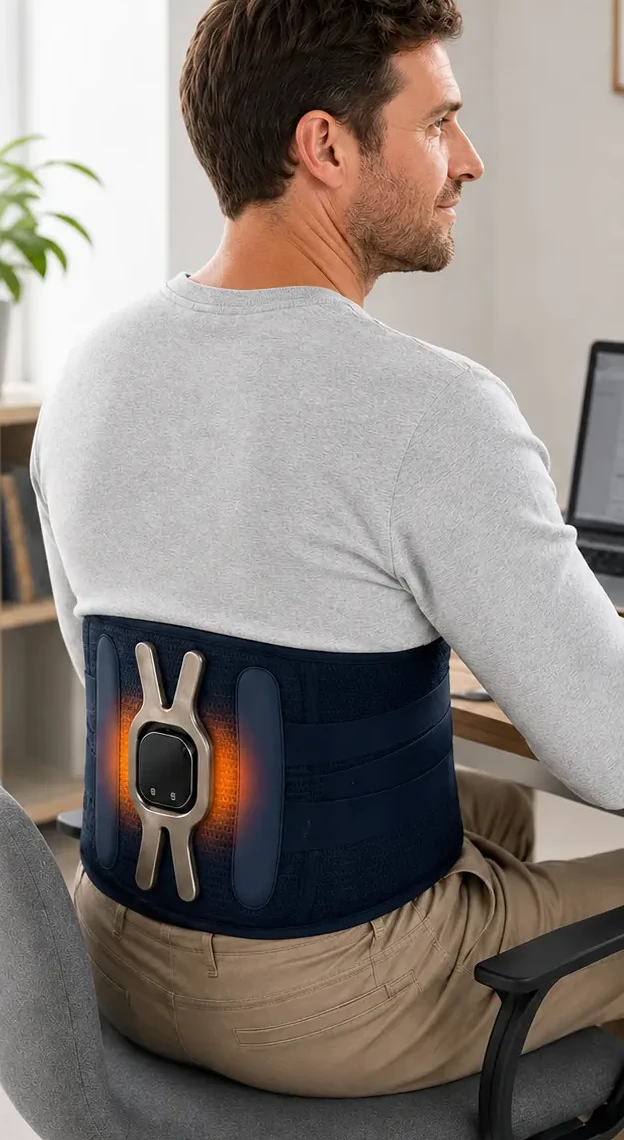
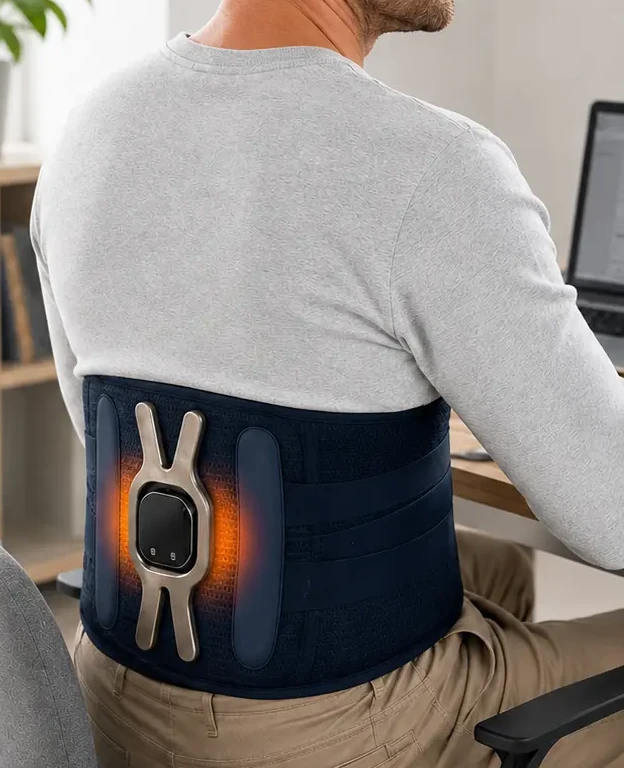
A chair cushion helps only in that chair. A heating pad needs a socket and a spare hand. A wearable belt goes with you between the desk, the meeting room and the commute, and it is slim enough to sit under a jumper.
Worn with the power off it holds your lumbar curve through the working day. At the end of the day the same belt runs a 15-minute heat and vibration session on the muscles that have been carrying the load, similar to the evening routine described for general back pain relief at home.
A workday routine that fits real work
Put the belt on when you sit down for the morning. Set a 45-minute timer and stand up when it goes off, even briefly. Keep your screen high and your feet flat.
Then run one 15-minute session with heat and vibration when you finish for the day, before the evening slump into the sofa. Doing that consistently, rather than only on bad days, is what makes a routine worth having.
Setting up your actual desk chair
If your office chair has a lumbar adjustment, use it — most people never touch it and it usually needs to sit lower and firmer than it comes set from the factory. Armrests should let your shoulders relax rather than shrug up, and your keyboard should be close enough that you are not reaching forward.
If you work from more than one location — home desk, office desk, kitchen table — a wearable belt is more practical than a chair-specific cushion, because the support moves with you rather than staying behind on one chair.
A comparison of common desk-work situations
Different sitting setups create slightly different problems. The table below covers the most common desk setups.
None of these require expensive equipment to fix — mostly they need a five-minute adjustment and a habit that is repeated daily.
Situation
What usually helps
Low, soft sofa or armchair for work
Firm seat, cushion behind lumbar curve, feet flat
Laptop on a low coffee table
Raise the screen, use an external keyboard if possible
Long back-to-back video calls
Stand for at least one call a day, belt worn for support
Shared or hot-desk seating
Wearable belt instead of a chair-specific cushion
Stretches and habits worth building in
A few minutes of gentle movement between meetings does more than an occasional big stretching session. Standing hip flexor stretches, a doorway chest opener, and simply walking to refill your water bottle all counteract hours of flexed sitting.
Avoid twisting to reach things behind you at your desk — rotate your chair instead. It is a small habit but repeated dozens of times a day it adds up to real load on a lower back that is already fatigued from sitting.
Red flags — when sitting pain needs a doctor
Ordinary desk-related back ache should ease with movement, support and a bit of heat over a few weeks. If it does not, or if you notice numbness or tingling into a leg, weakness when standing from a chair, or pain that wakes you at night regardless of position, get it checked.
Pain following a specific incident — a fall, a car accident, lifting something awkwardly — should also be assessed rather than managed with comfort measures alone, particularly if it is severe or does not settle within a few days.
Information on this page is educational and is not medical advice or a diagnosis. Stop using the product if it causes discomfort. Speak with a qualified healthcare professional about persistent, severe or unexplained pain, or before use if you have reduced sensation, are pregnant, or have an implanted electronic device.
Choose your bundle
Free worldwide shipping on every order · Prices in USD · 90-day money-back guarantee
Independent customer reviews are not published yet.
We will add feedback here as customers choose to share it. Until then, review the product specifications, instructions, shipping terms and guarantee before deciding.
Why does my lower back hurt after sitting all day?
Sitting flattens the natural inward curve of your lower spine and shifts load onto the lower back, while stillness reduces circulation in the surrounding muscles. The result is a dull ache that builds through the day.
How often should I stand up when working at a desk?
Aim for a short movement break every 45 minutes or so. Even two minutes of standing and walking restores circulation and resets your posture.
Does a lumbar support belt help with desk-job back pain?
Yes — supporting the lumbar curve while you sit removes some of the load the surrounding muscles are carrying, which is why many desk workers feel a difference within the first day of wearing one.
Can I wear the belt at my desk without anyone noticing?
It is slim enough to wear under a jumper, shirt or jacket, and the vibration is quiet enough to run during a call on a low setting.
Is a standing desk better?
Alternating between sitting and standing is usually better than either alone. Standing all day creates its own fatigue, so variety plus regular movement is the practical goal.
Is this safe to use if I have sciatica from sitting too long?
Many people with sitting-related sciatic discomfort find gentle warmth and support comfortable, but check with a doctor first, especially if you have numbness or weakness running down the leg.
Should I run heat while I'm sitting at my desk?
Most people wear the belt for support only during work hours and save the heat and vibration session for a proper 15-minute break, rather than running heat continuously through the day.
Will a lumbar cushion or the belt work better for a shared desk?
A wearable belt tends to suit shared or hot-desk seating better than a cushion, since it moves with you rather than staying behind on one specific chair.
Can desk-related back pain be a sign of something more serious?
Occasionally. If pain does not ease with movement and support, or comes with leg numbness, weakness or night pain unrelated to position, see a doctor rather than continuing to manage it at the desk.
How long before better sitting habits make a difference?
Some relief is often noticeable within the first day of better setup and support. A more lasting change in day-to-day comfort usually takes a few consistent weeks.
Risk-free
90-Day Money-Back Guarantee
Use the Triple Method Back Massager every day for 90 days. If your back doesn't feel better, email us and we'll refund the price of the product. No return-shipping runaround, no restocking fee, no need to keep the box.