Back Massager For Drivers: Surviving Long Hours Behind The Wheel
Driving is worse for your lower back than sitting at a desk, and long-haul drivers know it. You get the flattened lumbar curve of sitting, plus constant low-frequency vibration, plus a seat you cannot get out of when your back starts complaining.
A car seat holds your hips lower than your knees, which rolls the pelvis back and flattens the lumbar curve more than a decent office chair does. You also cannot shift position freely, because your feet and hands are occupied.
On top of that, road vibration transmits continuously through the seat into your spine. Hours of that is genuinely fatiguing for the muscles trying to stabilise you.
Safe use in a vehicle
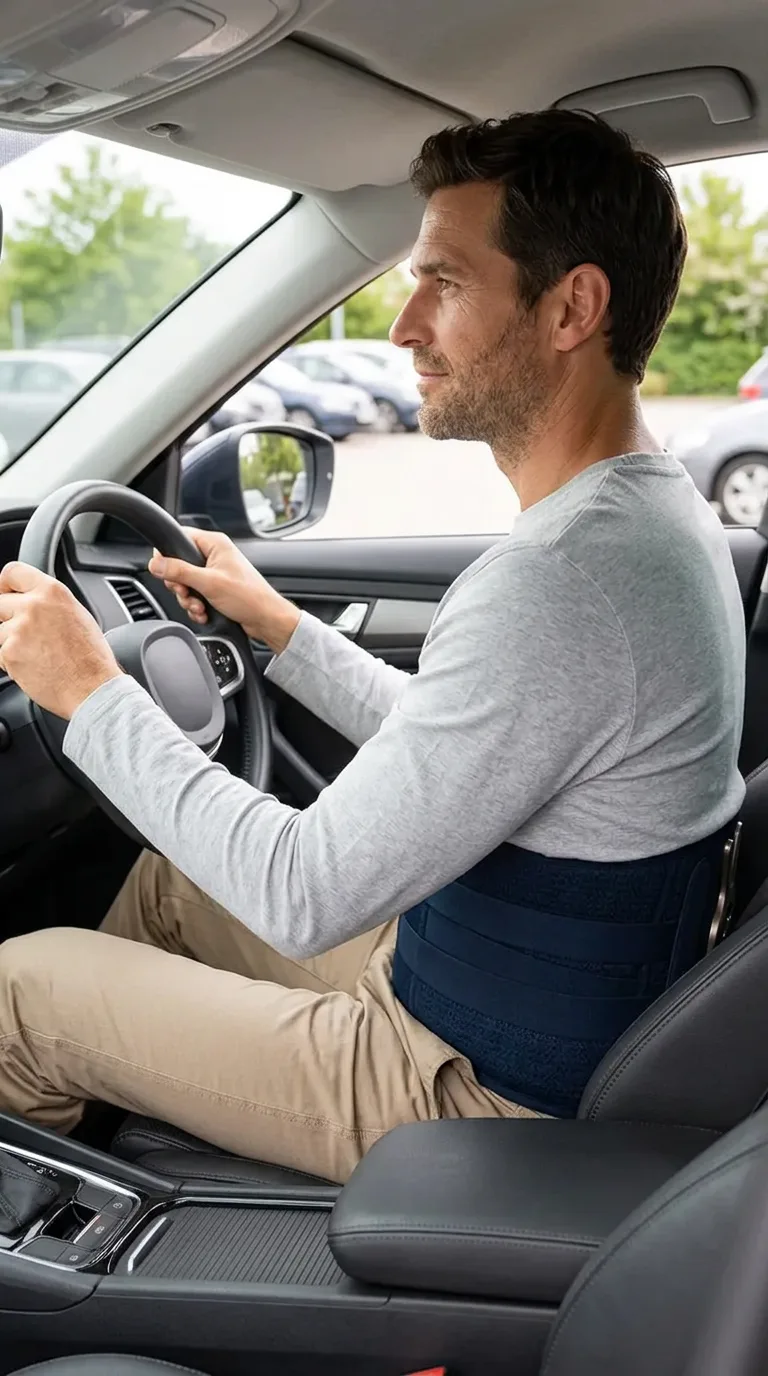
Wear the belt for support with the power off while you are driving. Do not run heat or vibration behind the wheel — anything that alters your attention or sensation while operating a vehicle is a bad idea, and warmth on a long drive can make you drowsy.
Save the powered session for your break. Fifteen minutes with heat and vibration in a lay-by, at a truck stop or in the yard is exactly the use case the cordless design was built for.
Driving: support only, power off
Rest stops: 15-minute heat and vibration session
Charge from a USB-C port in the cab overnight
Stand and walk for two minutes at every stop
Setting up the seat as well
The belt handles support, but a few seat adjustments compound it. Raise the seat base slightly so your hips are not below your knees, bring the seat close enough that you are not reaching for the pedals, and set the backrest close to upright rather than reclined.
Reclining feels comfortable for the first hour and is one of the main reasons drivers arrive stiff.
Why cordless matters on the road
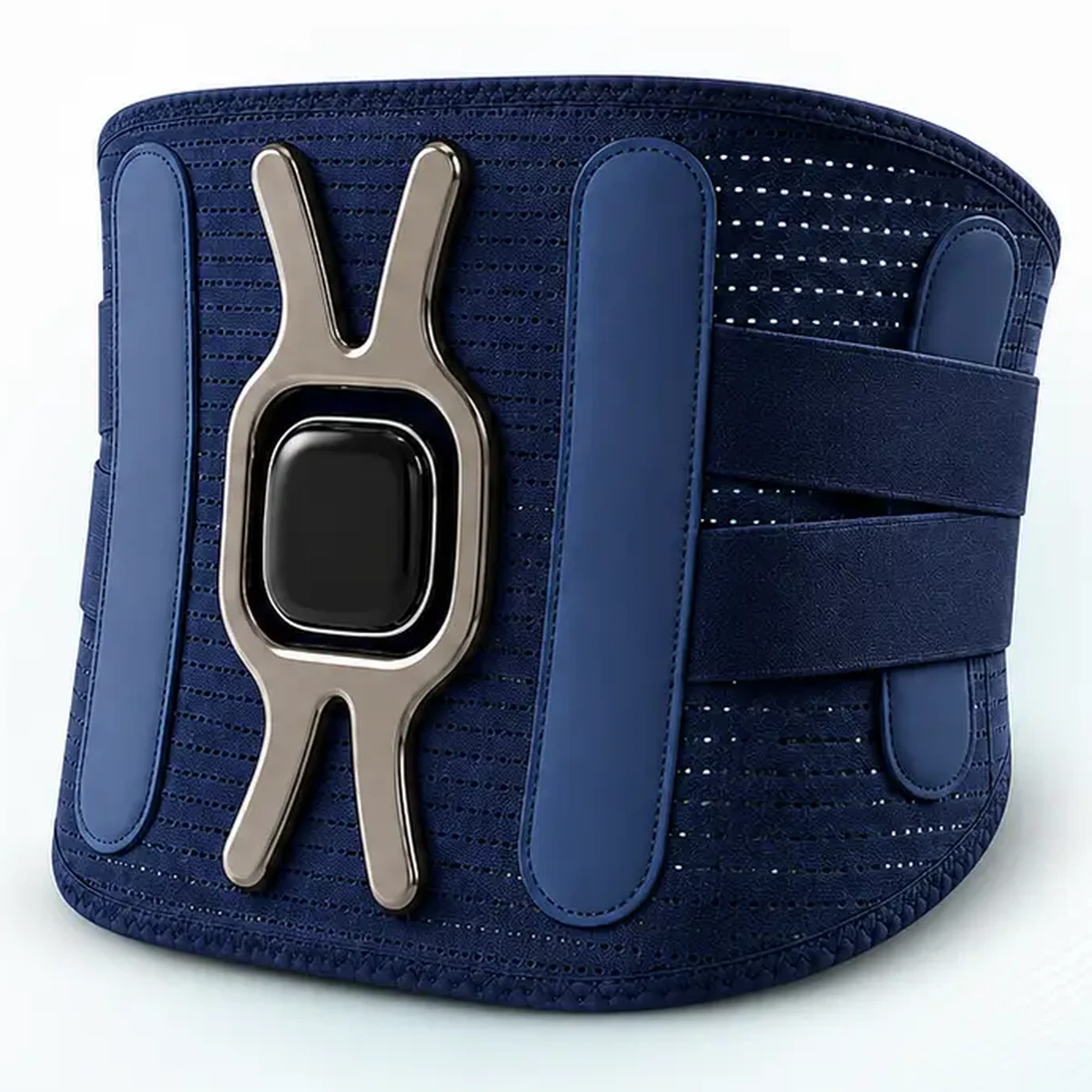
A plug-in heating pad in a cab means an adapter, a cable across the seat and a device you cannot take into a motel room. A USB-C belt charges from the same port as your phone and packs flat in a bag.
For drivers who spend nights away, the second unit in the two-pack is a common purchase — one lives in the cab, one lives at home.
What is actually happening in a driver's lower back
The combination of a flexed, seated posture, continuous low-frequency vibration from the road, and long periods without changing position puts sustained load on the same small group of lower back muscles and discs. Over months and years this repetitive load is a well-recognised occupational factor for drivers, which is exactly why support and regular breaks matter more here than in most other jobs.
None of this means every ache is serious, but it does mean drivers should take stiffness and soreness more seriously as an early warning than someone who moves around freely all day, simply because the exposure is more constant.
A realistic routine for a long-haul day
Structure matters more than any single product on a long driving day. The table below is a simple pattern to build a route around, adjusted for your own schedule and legally required breaks.
Point in the day
What to do
Before setting off
Adjust seat height, distance and backrest angle; belt on for support
Every 2 hours / legal break
Get out, walk for a few minutes, stretch hips and shoulders
At a proper rest stop
15-minute heat and vibration session before continuing
End of the day
Full session and, if possible, a short walk before bed
Stretches that suit drivers specifically
Standing hip flexor stretches undo a lot of what hours of a flexed seated position do. A gentle standing back extension — hands on your lower back, leaning back slightly while looking up — reverses the flattened posture that sitting creates. Both take under a minute and can be done at any stop.
Shoulder rolls and a doorway or trailer-frame chest stretch help drivers who spend hours gripping a wheel with rounded shoulders, which often compounds lower back tension even though the discomfort is felt lower down.
Red flags — when a driver's back pain needs a doctor
Get pain assessed rather than managed with a belt and stretching if it follows a crash or hard braking event, if you notice numbness or tingling down a leg or into the foot, if a leg feels weak when you get out of the cab, or if you have any change in bladder or bowel control.
Pain that is steadily worsening over weeks despite regular breaks and support, or that wakes you at night, should also be checked. Occupational back pain in drivers is common, but it is still worth ruling out a specific injury rather than assuming it will resolve on its own.
Information on this page is educational and is not medical advice or a diagnosis. Stop using the product if it causes discomfort. Speak with a qualified healthcare professional about persistent, severe or unexplained pain, or before use if you have reduced sensation, are pregnant, or have an implanted electronic device.
Choose your bundle
Free worldwide shipping on every order · Prices in USD · 90-day money-back guarantee
Independent customer reviews are not published yet.
We will add feedback here as customers choose to share it. Until then, review the product specifications, instructions, shipping terms and guarantee before deciding.
Wear it for lumbar support with the power off while driving. Do not run the heat or vibration functions behind the wheel — save powered sessions for your rest stops.
Why does my back hurt so much after a long drive?
Car seats tend to drop your hips below your knees and flatten the natural lumbar curve, and continuous road vibration fatigues the muscles stabilising your spine. You also cannot shift position freely while driving.
Will it fit in a truck cab?
Yes. It is a slim wearable belt, not a seat cushion, so it takes no cab space and travels into the motel room with you. It charges from any USB-C port.
How often should I stop on a long drive?
Every couple of hours, and use the stop properly — stand, walk for a few minutes, and run a 15-minute heat and vibration session before you set off again.
Does it work as a seat support on its own?
Yes. With the power off it functions as a lumbar support belt, which is exactly how most drivers wear it on the road.
Is it safe to use if I have sciatica made worse by driving?
Support worn while driving and a gentle heat session at rest stops are often comfortable for driving-related sciatic discomfort, but check with a doctor first if you have numbness or weakness in the leg.
Can drivers with a herniated disc use this?
This is a comfort device rather than a treatment for a diagnosed disc problem. If you have a known disc issue, ask your doctor whether support and heat are appropriate for your situation before relying on it for long shifts.
How long can I safely wear the belt while driving?
Worn for support only, at a comfortable tension, it can be worn for the length of a normal driving shift. Loosen it or take a short break if it ever feels restrictive.
Is it safe to use after a car accident?
See a doctor after any accident before resuming heat, support or vibration on your back, particularly if there is any pain, numbness or reduced movement, to rule out an injury that needs specific treatment.
Does the two-pack make sense for drivers?
Many drivers who spend nights away from home find it convenient to keep one unit in the cab and one at home, so a charged belt is always available without swapping it between locations.
Risk-free
90-Day Money-Back Guarantee
Use the Triple Method Back Massager every day for 90 days. If your back doesn't feel better, email us and we'll refund the price of the product. No return-shipping runaround, no restocking fee, no need to keep the box.