There are six main categories of back device and they are genuinely different tools rather than competing versions of one product. This hub compares all of them honestly, including the situations where the Triple Method Back Massager is the wrong choice, and links out to head-to-head pages such as back massager vs heating pad and back massager vs massage gun, plus the broader back pain relief guide for causes and routines.
Each of these does one job well. The reason people end up owning three of them is that no single-function device covers warmth, support and movement together.
Follow the individual comparison pages for the detail on any pairing you are weighing up, particularly back massager vs heating pad and back massager vs massage gun, which go deeper on the two most common alternatives people consider first.
Heating pad — cheap surface warmth, corded, no support or massage
Massage gun — deep percussion, needs a free hand, hard to self-apply to the lumbar area
TENS unit — electrical pulses, consumable pads, no warmth or support
Back brace — support only, nothing happens to the tissue
Massage chair or cushion — whole-back relaxation, expensive or chair-bound
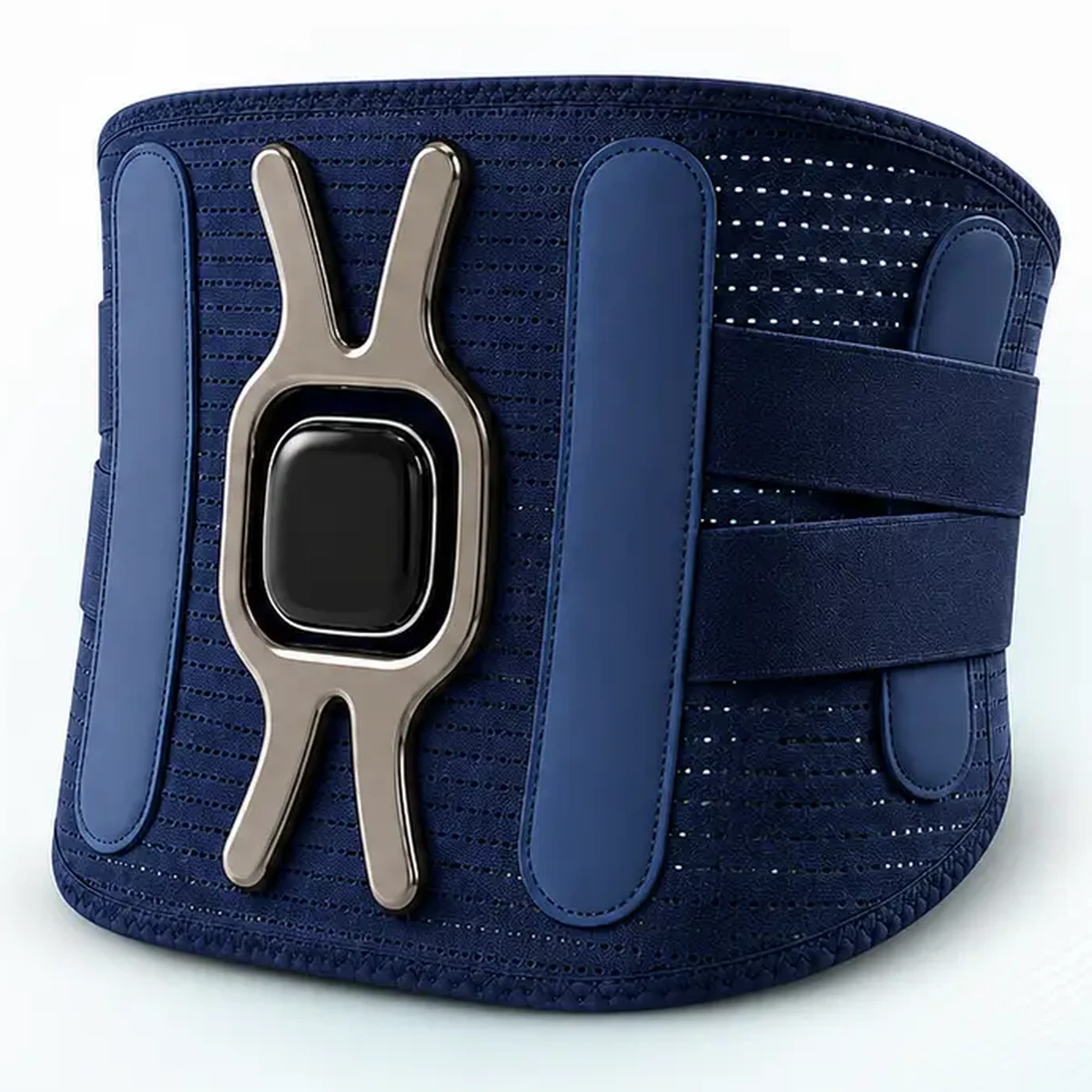
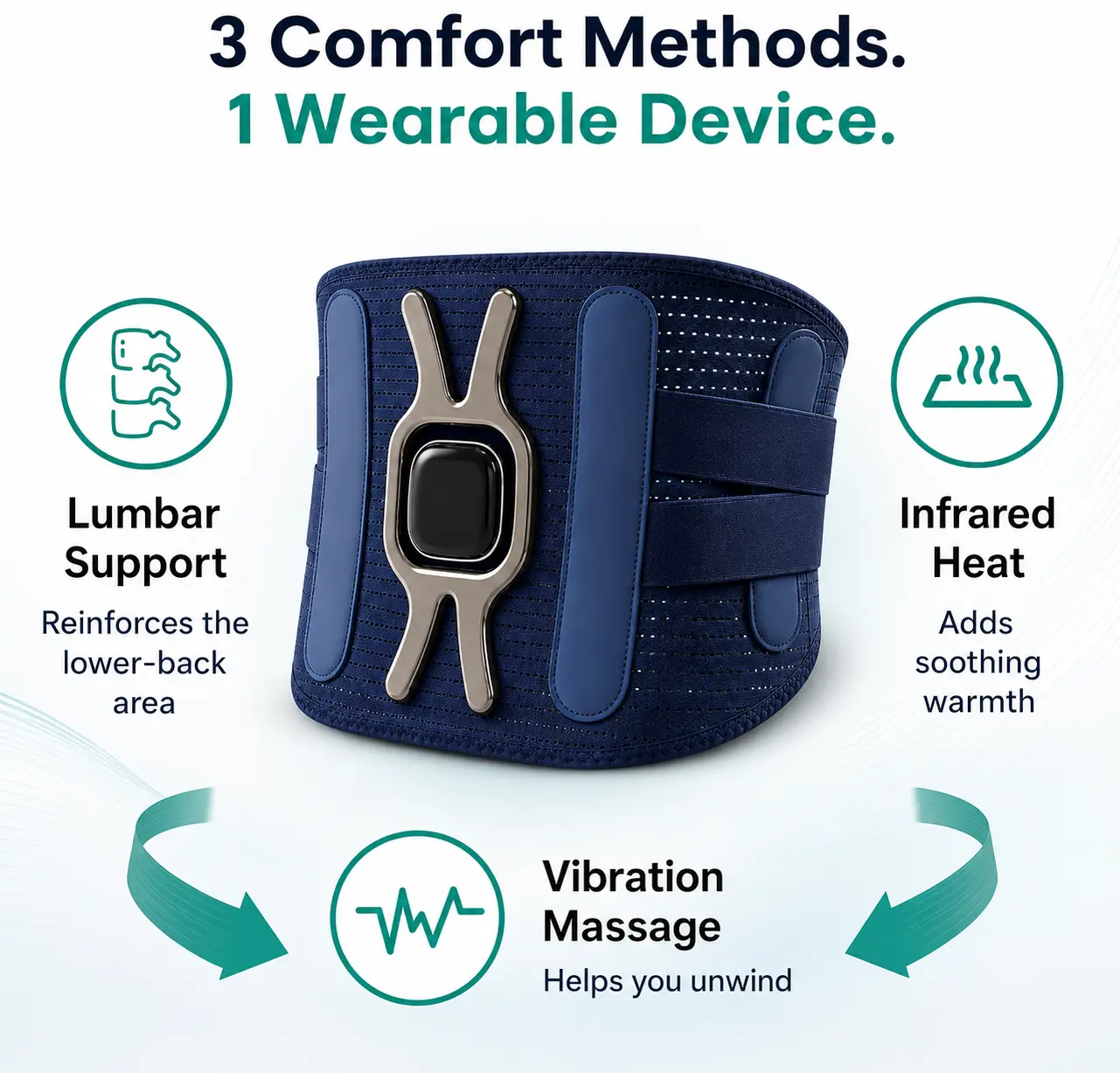
Wearable heat and massage belt — support, warmth and vibration together, hands-free
How to choose between them
Ask three questions. Where does it hurt — if it is specifically the lower back, wearable formats win on targeting. When do you need it — if the answer includes work, driving or shifts, corded and chair-bound options are out. And how often — occasional soreness rarely justifies more than a heating pad.
Daily lower back trouble that follows you to work is the case a wearable combined device is designed for. If your pain pattern matches the desk-worker, driver or standing-shift routines described in the back pain relief guide, that is a reasonable signal that a portable option will fit your day better than a corded one.
Budget, durability and what actually gets used
Price is not the best predictor of which device ends up in a drawer unused within a month. Cordless operation, comfort under clothing, and how quickly you can put it on and take it off matter more in practice than motor strength or a long feature list.
A heating pad is inexpensive but tethers you to a wall outlet, which rules out use in a car, at a desk in an open office, or on the move. A massage gun needs a free hand and a reachable angle, which is awkward for the lower back specifically since you cannot easily see or brace the area you are working on. A TENS unit needs replacement pads over time, which is an ongoing cost most buyers do not account for at purchase.
A back brace supports posture but does nothing to the muscle tissue itself, and a massage chair solves comfort at home but cannot travel with you to work or in the car. Weighing these trade-offs against your actual daily pattern, rather than against a spec sheet, is the more useful exercise.
Question
Answer
Cheapest option
Basic heating pad, but corded and no support or massage
Most portable option
Cordless wearable heat and massage belt
Ongoing cost
TENS units need replacement pads; wearable belts and heating pads do not
Best for driving or desk use
Wearable belt worn during the activity itself
Best for neck and shoulders
Massage cushion or handheld massage gun, not a lumbar belt
Trial period
90-day money-back guarantee on the Triple Method Back Massager
When we are not the right answer
If your discomfort is in the neck, shoulders or mid-back rather than the lumbar area, a chair, cushion or massage gun will serve you better than a lumbar belt.
If a clinician has prescribed a specific device or brace for a diagnosed condition, follow that advice. And if your back only bothers you a few times a year in the same armchair, a heating pad is the sensible purchase — spending more on a wearable device for occasional use is not a good trade.
Where the Triple Method Back Massager fits
It is built for one job: daily lower back relief that works hands-free, anywhere, combining lumbar support, infrared heat and dual-motor vibration in one fifteen-minute session.
At $99.95, or $89.95 each in the two-pack and $79.95 each in the three-pack, it replaces the pad, the brace and the chair cushion for the specific case of daily lumbar stiffness — and if it does not work for your back, the 90-day guarantee returns the product price. The back pain relief guide covers the routines that get the most out of a device like this once you have decided it is the right category for you.
How it compares
Triple Method Back Massager compared with typical single-function back products
Feature
Triple Method Back Massager
Typical alternatives
Lumbar support while you wear it
Infrared heat therapy
Sometimes
Vibration massage motors
Cordless — use it anywhere
Fits waists 27" to 55"
No pills, no clinic visits, no appointments
90-day money-back guarantee
One-off price, no subscription
Choose your bundle
Free worldwide shipping on every order · Prices in USD · 90-day money-back guarantee
Independent customer reviews are not published yet.
We will add feedback here as customers choose to share it. Until then, review the product specifications, instructions, shipping terms and guarantee before deciding.
For daily lower back stiffness a wearable belt combining lumbar support, heat and vibration covers the most ground. For occasional soreness in one chair a heating pad is enough, and for neck or mid-back discomfort a chair or cushion is a better fit.
Do I need more than one device?
Many people end up with three — a pad, a brace and something to massage with — because each one covers what the others do not. A combined belt is designed to make that unnecessary for the lower back specifically.
Is a more expensive device always better?
No. Fit, cordless operation and hands-free use predict whether you will still be using a device in six weeks far better than price or motor power do.
What about the neck and upper back?
The Triple Method Back Massager is shaped for the lumbar area. For neck and shoulder discomfort, a shiatsu cushion or a massage gun is a better tool.
How do I decide without guessing?
Use the 90-day guarantee as the test. Use it daily for a few weeks and judge it on your own back — if it has not helped, email support for a refund of the product price.
How does a wearable belt compare with a massage chair on cost?
A massage chair is typically a much larger upfront cost and stays in one room, while a wearable belt is a fraction of the price and travels with you, though a chair can cover the whole back and shoulders in a way a lumbar belt does not attempt to.
Do TENS units help the same way as a massage belt?
They work differently — a TENS unit delivers electrical pulses and needs replacement pads over time, while a wearable belt combines physical vibration, heat and support without consumables.
Can I use a heating pad and a massage gun instead of buying one combined device?
You can, and it is a reasonable approach if you already own both, though it means being tethered to an outlet for heat and needing a free hand for the massage gun, which a hands-free wearable avoids.
Is a back brace enough on its own?
A brace supports posture and can reduce strain during an aggravating activity, but it does not add warmth or movement to the muscle tissue, which is why many people pair it with heat or massage separately.
Which option is best for someone who drives for a living?
A wearable belt that can be worn during the drive itself tends to suit drivers better than corded or chair-bound options, since it works in the seated position without extra equipment in the vehicle.
Risk-free
90-Day Money-Back Guarantee
Use the Triple Method Back Massager every day for 90 days. If your back doesn't feel better, email us and we'll refund the price of the product. No return-shipping runaround, no restocking fee, no need to keep the box.